
8 CFR 103.2(b)(3) Translation Certification: A Complete Guide for USCIS Compliance
VISA TRANSLATIONI18NINDIA
Meghna | info@prolingoeditors.com | +91-9560765770
2/21/20265 min read
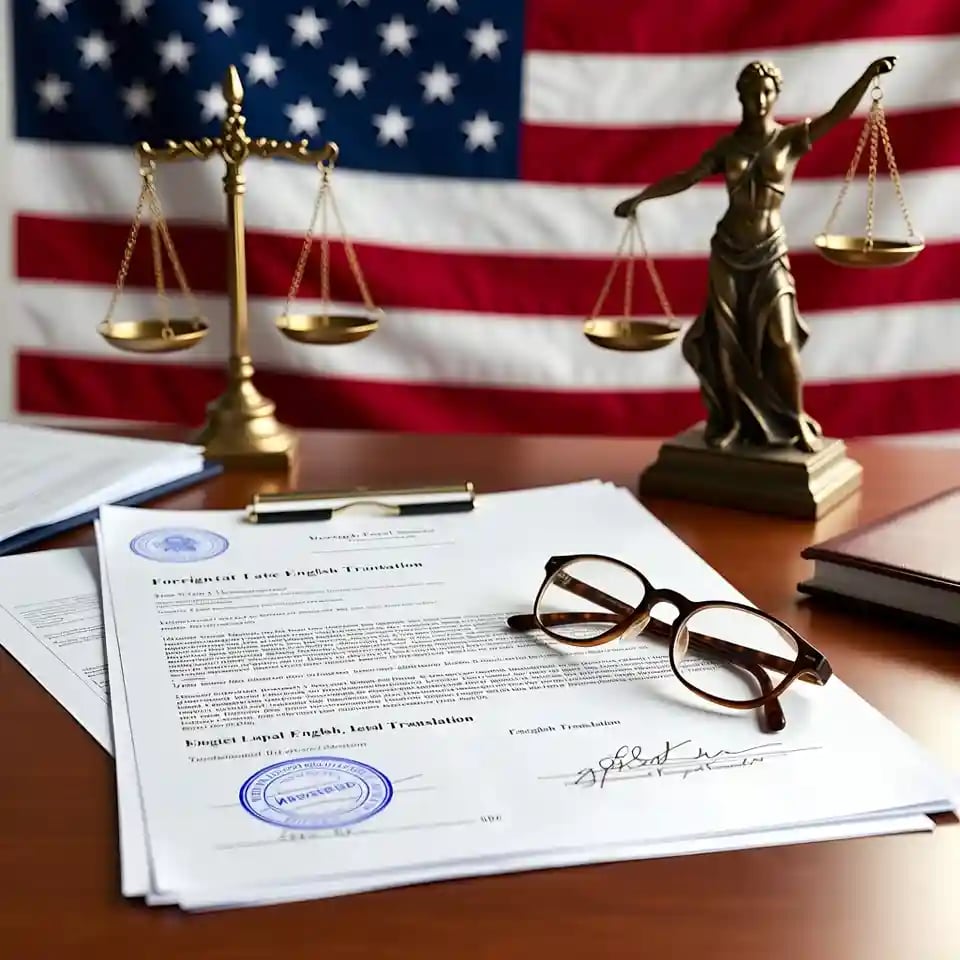
In the complex world of U.S. immigration, even a minor clerical error can lead to a Request for Evidence (RFE) or, worse, a denial of an application. One of the most critical yet frequently misunderstood requirements is the 8 CFR 103.2(b)(3) translation certification.
If you are submitting documents in a foreign language to USCIS, you must adhere strictly to the federal regulations outlined in 8 CFR 103.2(b)(3) translation certification. This guide explores everything you need to know about this regulation and how ProLingo Editors ensures your documents meet every legal benchmark.
What is 8 CFR 103.2(b)(3) Translation Certification?
The Code of Federal Regulations (CFR) is the codification of the general and permanent rules published in the Federal Register by the executive departments and agencies of the Federal Government. Title 8 specifically deals with "Aliens and Nationality."
The section 8 CFR 103.2(b)(3) translation certification explicitly states:
"Any document containing foreign language submitted to USCIS shall be accompanied by a full English language translation which the translator has certified as complete and accurate, and by the translator's certification that he or she is competent to translate from the foreign language into English."
(Source: GovInfo - Official Government Publishing Office)
Key Components of the Regulation
To satisfy the 8 CFR 103.2(b)(3) translation certification requirement, four elements must be present:
Completeness: The translation must be a "full" translation, not a summary.
Accuracy: The content must mirror the original document precisely.
Competency Statement: The translator must formally state they are proficient in both languages.
Certification: A signed statement verifying the above points.
Why 8 CFR 103.2(b)(3) Translation Certification is Vital for Your Immigration Success
When applying for a Green Card, Visa, or Naturalization, your supporting documents (birth certificates, marriage licenses, police clearances) act as the foundation of your case. USCIS officers are not required to speak your native language. Therefore, the 8 CFR 103.2(b)(3) translation certification acts as the bridge of trust between your foreign documents and the federal adjudicator.
Avoiding the Dreaded RFE
A Request for Evidence (RFE) is issued when an officer feels the documentation is insufficient. A common reason for an RFE is a non-compliant 8 CFR 103.2(b)(3) translation certification. If your translator forgets to mention their "competence" or fails to certify the translation as "complete," your entire application process could be delayed by months.
Legal Validity and Precision
The legal terminology used in foreign legal systems often does not have a 1:1 equivalent in American English. The 8 CFR 103.2(b)(3) translation certification ensures that a professional has navigated these nuances to provide a version that is legally equivalent under U.S. law.
Common Documents Requiring 8 CFR 103.2(b)(3) Translation Certification
Most applicants underestimate the breadth of documents that fall under this mandate. Any paper not originally in English must have an 8 CFR 103.2(b)(3) translation certification. This includes:
Vital Records: Birth, Marriage, Divorce, and Death Certificates.
Academic Records: Diplomas, Transcripts, and Course Descriptions.
Financial Records: Bank statements, property deeds, and tax filings.
Legal Records: Court judgments, police records, and affidavits.
Identity Documents: Passports (if they contain foreign language notations) and National ID cards.
The ProLingo Editors Advantage: Precision in 8 CFR 103.2(b)(3) Translation Certification
At ProLingo Editors, we understand that behind every document is a person’s dream of a new life or career in the United States. We don’t just translate words; we ensure legal compliance. Here is how our team delivers the 8 CFR 103.2(b)(3) translation certification with 100% accuracy.
1. Expert Linguists with Legal Backgrounds
We don't use automated tools for your certification. Every 8 CFR 103.2(b)(3) translation certification is handled by a human translator who is a native speaker and possesses a deep understanding of legal terminology in both the source and target languages.
2. Strict Adherence to USCIS Formatting
USCIS prefers translations that mirror the original document's layout. Our team ensures that the English version looks like the original, making it easier for the USCIS officer to compare the two side-by-side while reviewing the 8 CFR 103.2(b)(3) translation certification.
3. Rigorous Quality Control
Every translation at ProLingo Editors undergoes a two-tier review process:
Initial Translation: Done by a subject matter expert.
Proofreading: Verified by a second linguist to ensure the 8 CFR 103.2(b)(3) translation certification criteria are met without error.
4. Authenticated Certification Statements
Our certification statements are drafted specifically to satisfy the wording required by federal law. We explicitly state the translator's competence and the completeness of the work, precisely as demanded by the 8 CFR 103.2(b)(3) translation certification guidelines.
Step-by-Step Process for Obtaining a Certified Translation
If you are working with ProLingo Editors, the process for securing your 8 CFR 103.2(b)(3) translation certification is seamless:
Submission: You upload a high-resolution scan of your foreign documents.
Analysis: Our project managers determine the complexity and assign a linguist competent in that specific language pair for the 8 CFR 103.2(b)(3) translation certification.
Drafting: The translation is completed, ensuring every stamp, seal, and handwritten note is included.
Certification: We attach a formal letterhead statement that fulfills the 8 CFR 103.2(b)(3) translation certification requirements.
Delivery: You receive a digital PDF (accepted by USCIS for online filings) and, if needed, physical copies for mail-in applications.
Frequently Asked Questions (FAQs)
Can I translate my own documents for USCIS?
While the law does not strictly forbid it if you are "competent," it is highly discouraged. USCIS officers may perceive a conflict of interest. Using a professional agency like ProLingo Editors for your 8 CFR 103.2(b)(3) translation certification provides an objective, third-party verification that carries more weight and reduces the risk of rejection.
Does the translation need to be notarized?
Actually, according to current USCIS guidelines, a notarized translation is not strictly required if the 8 CFR 103.2(b)(3) translation certification is properly executed. However, some other agencies (like the Department of State for passports) may still require it. ProLingo Editors offers notarization as an add-on service for extra security. (Source: USCIS Policy Manual)
What happens if my translation is incomplete?
If a translation does not meet the 8 CFR 103.2(b)(3) translation certification standard of being "full and complete," USCIS will reject the document. This includes failing to translate small details like ink stamps or marginalia.
The Risks of Using Unprofessional Services
Many "cheap" translation services use machine translation (like Google Translate) and simply slap a signature on it. This is a dangerous practice for an 8 CFR 103.2(b)(3) translation certification. Machine translation often fails at:
Contextual meaning of legal terms.
Reading handwritten text on old birth certificates.
Translating specialized abbreviations.
ProLingo Editors guarantees that every 8 CFR 103.2(b)(3) translation certification we issue is 100% human-generated and meticulously checked for these common pitfalls.
Conclusion: Trust ProLingo Editors for Your Immigration Journey
Navigating the U.S. immigration system is stressful enough without worrying about the technicalities of federal regulations. By ensuring your documents comply with the 8 CFR 103.2(b)(3) translation certification, you are taking a proactive step toward a smooth application process.
ProLingo Editors (CIN - U74999UP2017PTC098769) is dedicated to providing high-quality, legally compliant translations that stand up to the scrutiny of USCIS officers. Whether it is a birth certificate from Mexico, a marriage license from India, or a diploma from France, our 8 CFR 103.2(b)(3) translation certification service is designed to give you peace of mind.
Don't leave your future to chance. Choose the experts who understand the fine print.
#USCIS #CertifiedTranslation #8CFR1032b3 #ImmigrationLaw #ProLingoEditors #LegalTranslation #GreenCardProcess
Need an 8 CFR 103.2(b)(3) translation certification for USCIS? Learn the requirements and how ProLingo Editors provides accurate, certified translations for immigration success.
